Start Small, Learn Fast: The Power of Validated Innovation
“Successful innovation does not always begin with a big launch. By starting small, testing ideas, and learning from real user feedback and data, teams can reduce uncertainty and build products that solve genuine problems.”
Start Small, Learn Fast: The Power of Validated Innovation
Innovation is often associated with big ideas, ambitious products, and breakthrough success. However, successful innovation does not always begin with a large investment or a fully developed product. Sometimes, it begins with a small experiment and a willingness to learn.
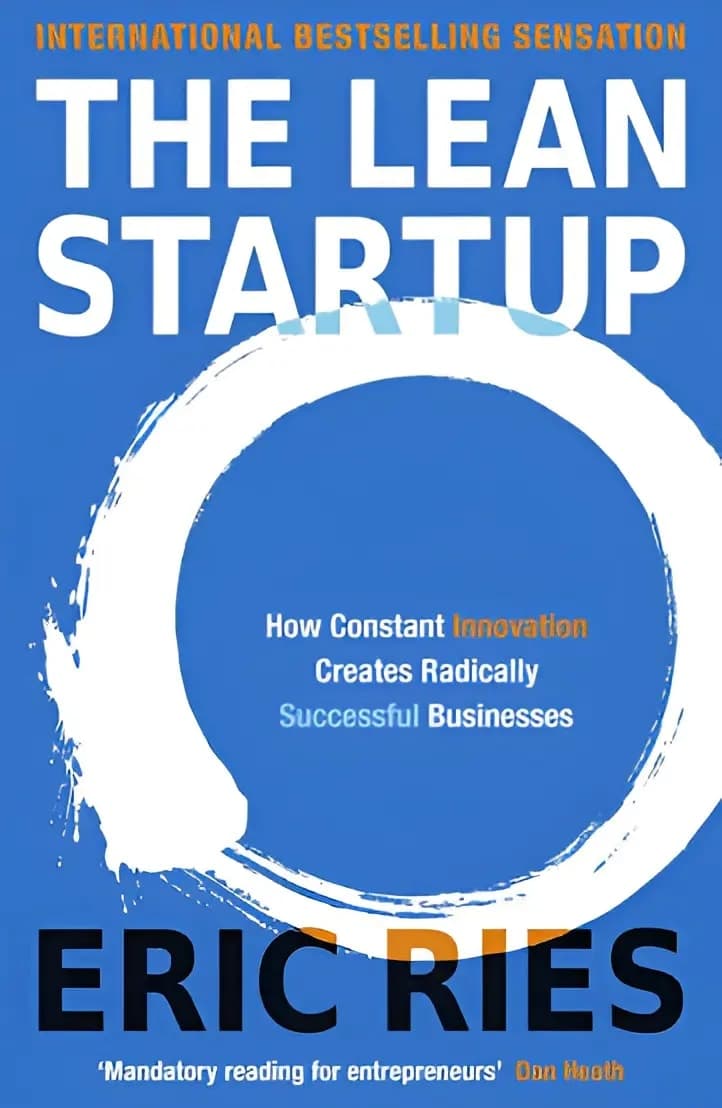
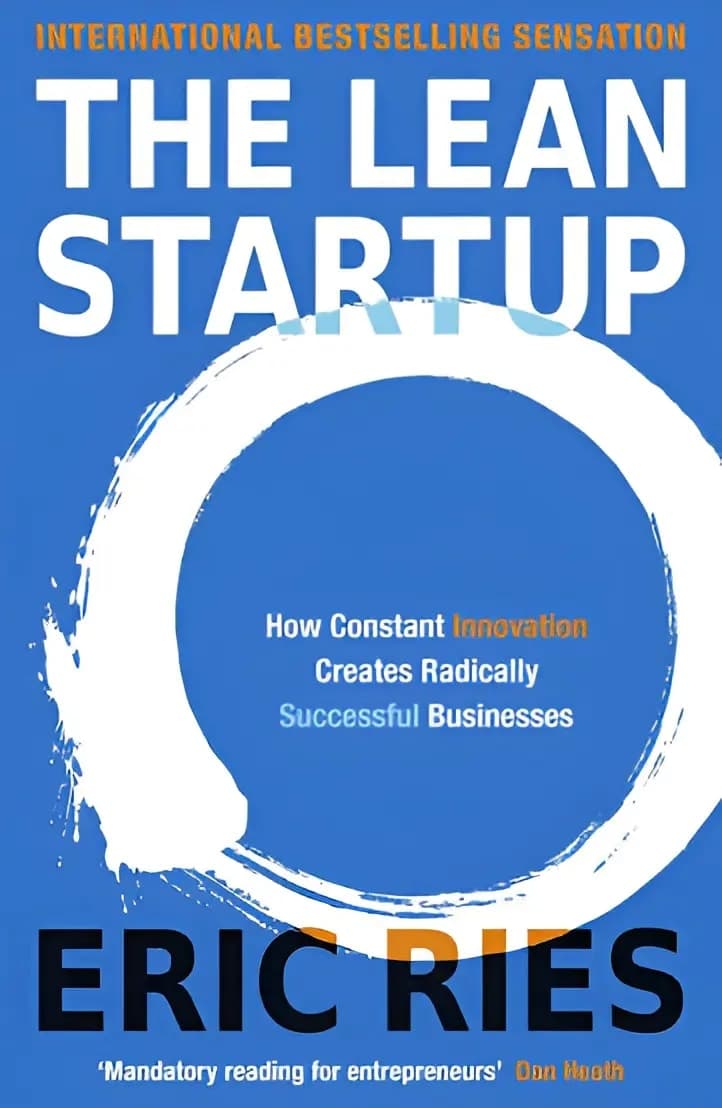
In The Lean Startup, Eric Ries emphasizes the importance of learning through real-world evidence rather than relying entirely on assumptions. When an idea has produced no product, no users, and no data, it is easy to imagine that it could become successful. There is nothing yet to challenge our expectations.
This is where starting small becomes valuable.
Instead of spending months building a complete product based on assumptions, a team can create a simple version that tests the most important part of the idea. This allows the team to observe what real users do, what they value, what they ignore, and what problems they encounter.
From Assumptions to Evidence
Every new product begins with assumptions.
You might assume that customers have a particular problem. You might assume they will use your solution. You might even assume that they will pay for it.
But an assumption is not the same as evidence.
For example, asking someone, "Would you use this product?" may produce encouraging answers. However, seeing that person actually use the product provides stronger evidence. Seeing them return to the product provides even more information. If they are willing to pay for it, the evidence becomes even stronger.
This is the principle behind validated learning.
The objective is not simply to build something quickly. The objective is to learn quickly.
Why Small Numbers Matter
At the beginning of a project, the numbers may be very small.
You might have:
- 10 users
- 5 active users
- 2 paying customers
- 20 pieces of feedback
These numbers may seem insignificant compared with the large audience you hope to reach one day. However, they can provide something much more valuable: evidence.
For example, if only 2 out of 20 users continue using a product, that tells you something. Perhaps the problem is not important enough. Perhaps the product is difficult to use. Perhaps the target audience is wrong.
Instead of treating this as failure, a team can treat it as information and use it to improve the next experiment.
Build, Measure, Learn
One of the central ideas of the Lean Startup approach is the Build-Measure-Learn cycle.
Build: Create the smallest version of the solution that can test an important assumption.
Measure: Observe what users actually do and collect meaningful data.
Learn: Use the evidence to decide what should change, continue, or be tested next.
The cycle then begins again.
This approach helps teams avoid spending large amounts of time building features that users may never need.
Validation Is More Than Positive Feedback
It is important to understand that validation does not simply mean hearing people say that an idea is good.
Someone saying, "That is a great idea," is encouraging, but it is not strong evidence of demand.
Stronger signals come from behavior:
- Do people actually use the product?
- Do they come back?
- Do they recommend it?
- Do they complete the intended action?
- Are they willing to pay?
- Do they ask for the product when it is unavailable?
Real behavior can reveal information that opinions alone cannot.
Applying the Idea
This principle can be applied to startups, student projects, businesses, and even community initiatives.
Suppose a team wants to create a platform for organizing community discussions. Instead of immediately developing a complete application, the team could first run the process manually with a small group.
They could organize one discussion each week, observe participation, collect feedback, and identify what works and what does not.
If people actively participate and continue requesting the experience, the team has evidence that the concept may be worth developing further.
If participation is low, the team has also learned something valuable before investing heavily in software development.
Innovation as a Learning Process
The deeper lesson is that innovation is not only about having creative ideas. It is about discovering which ideas work in the real world.
Starting small does not mean thinking small.
It means reducing the cost of being wrong.
A team can test an assumption with a small experiment, learn from the results, make improvements, and gradually increase its investment as evidence becomes stronger.
Instead of asking only:
"How successful could this idea become?"
we can also ask:
"What can we test this week to learn whether this idea actually works?"
That change in mindset can transform how products and businesses are built.
Conclusion
Great products do not have to begin with certainty. They can begin with a hypothesis.
The important thing is to expose that hypothesis to reality as early as possible.
Start small. Build something real. Measure what happens. Listen to users. Learn from the evidence. Then improve.
The goal is not simply to build faster. It is to learn faster and make better decisions with each iteration.
Innovation becomes more meaningful when ideas move beyond imagination and are tested against reality.
Entrepreneurs & Traders Society
Dispatches and research formulated by student founders and quantitative analysts at Rwanda Coding Academy.